AI Operations Intelligence
Operatsion markazning AI-qatlami — oʻxshash holatlar, birlamchi sabablarni tartiblash, bashoratli texnik xizmat koʻrsatish, detektorlar driftini tahlil qilish va yuzaga kelayotgan risklar, doimo qarorlar konturida inson ishtirokida.
AI Operations Intelligence — bu Operational Health Matrix’ning analitik komponenti boʻlib, toʻplangan maʼlumotlarni intellektual tahlil qilish hisobiga ekspluatatsiya sifatini oshirishga moʻljallangan.
AI ekspluatatsion qarorlarni mustaqil ravishda qabul qilmaydi.
Barcha tavsiyalar muhandis uchun ekspert yordami sifatida qaraladi va foydalanuvchining tasdigʻini talab qiladi.
Bunday yondashuv kritik infratuzilmalarning shaffofligi, takrorlanuvchanligi va boshqariluvchanligi tamoyillariga muvofiqlikni taʼminlaydi.
Loyihalash tamoyillari
AI komponenti quyidagi tamoyillar asosida quriladi:
- tushuntiriladigan tavsiyalar;
- qarorlar konturida inson ishtiroki (Human-in-the-Loop);
- deterministik operatsion workflow;
- qarorlarni kuzatuvchan qoʻllab-quvvatlash;
- buzmaydigan analitika.
Sunʼiy intellektning birorta tavsiyasi ham Operational Issue’ni avtomatik ravishda oʻzgartirmaydi.
Oʻxshash Operational Issues
Yangi Operational Issue qayd etilganda tizim avtomatik ravishda oʻxshash holatlarni qidiradi.
Solishtirish quyidagi parametrlar boʻyicha amalga oshiriladi:
- Issue kanoni;
- uskuna turi;
- proshivka versiyasi;
- konfiguratsiya;
- mintaqa;
- ekspluatatsiya sharoitlari;
- Root Cause;
- qoʻllanilgan yechim;
- tasdiqlangan natija.
Muhandisga eng mos keladigan holatlar oʻxshashlik darajasi koʻrsatilgan holda taqdim etiladi.
Root Cause’larni tartiblash
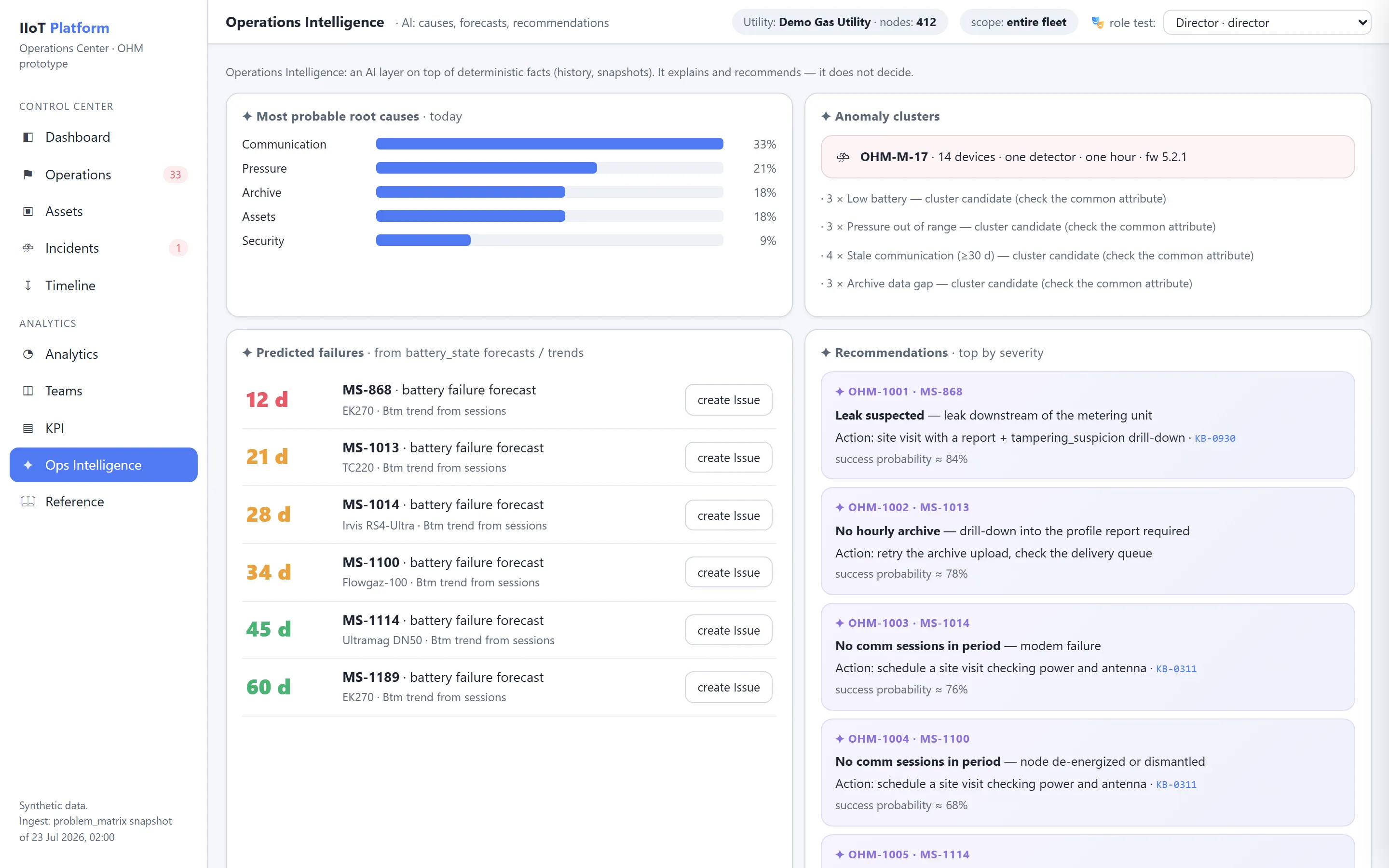
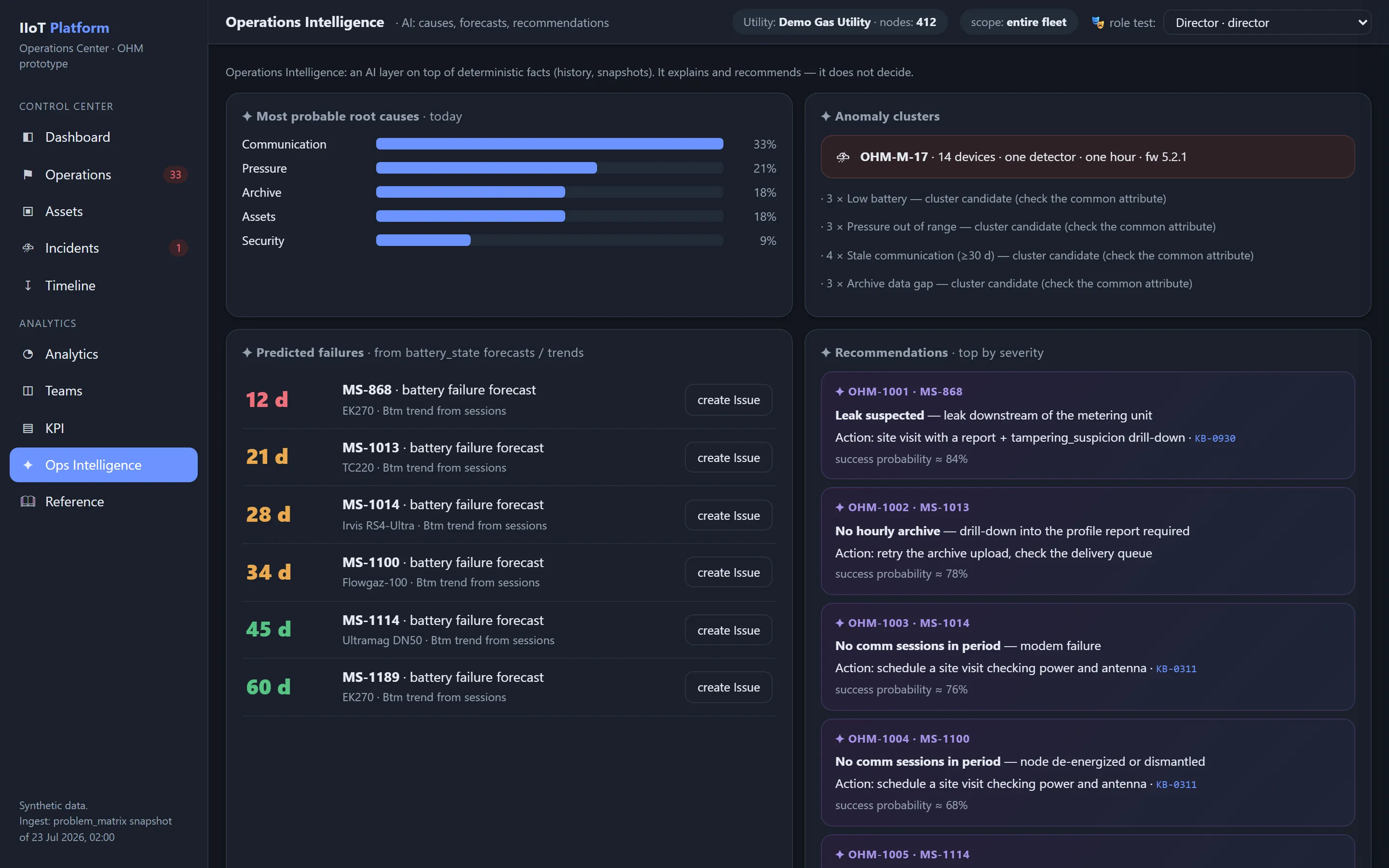
Bir nechta mumkin boʻlgan sabab mavjud boʻlganda tizim eng ehtimolli Root Cause’larning tartiblangan roʻyxatini shakllantiradi.
Har bir sabab uchun quyidagilar koʻrsatiladi:
- ehtimollik;
- tasdiqlovchi Evidence;
- oʻxshash holatlar;
- tavsiya etilgan tekshiruvlar;
- kutilayotgan taʼsir.
Yakuniy Root Cause’ni muhandis aniqlaydi.
Bashoratli texnik xizmat koʻrsatish
Tarixiy maʼlumotlar asosida tizim ekspluatatsion muammolar yuzaga kelishi ehtimoli yuqori boʻlgan uskunani aniqlaydi.
Prognoz quyidagilarni hisobga olishi mumkin:
- Health Score degradatsiyasining tezligi;
- kanonlarning takrorlanishi;
- taʼmirlar statistikasi;
- uskunaning yoshi;
- aloqa barqarorligi;
- mavsumiy omillar;
- ekspluatatsiya jadalligi.
Natijada profilaktik texnik xizmat koʻrsatish boʻyicha tavsiya shakllantiriladi.
Detektorlar driftini tahlil qilish
OHM oʻzining analitik modellari samaradorligini uzluksiz nazorat qiladi.
Har bir Detector uchun quyidagilar tahlil qilinadi:
- Accuracy’ning oʻzgarishi;
- Precision’ning oʻzgarishi;
- Recall’ning oʻzgarishi;
- False Positive’lar sonining oʻsishi;
- False Negative’lar sonining oʻsishi;
- Confidence Distribution’ning oʻzgarishi.
Degradatsiya aniqlanganda Detector Requires Review holatiga oʻtkaziladi.
Yuzaga kelayotgan ekspluatatsion risklar
AI yangi tendensiyalarni aniqlash uchun Operational Issues majmuasini tahlil qiladi.
Masalan:
- muayyan uskuna modelida nosozliklarning oʻsishi;
- proshivka yangilangandan soʻng xatolar sonining ortishi;
- ayrim mintaqada aloqaning yomonlashuvi;
- bir xil Root Cause’lar sonining ortishi.
Bunday hodisalar Emerging Risks sifatida koʻrsatiladi.
Tavsiyalarning ishonchliligi
Har bir tavsiya ishonchlilik koeffitsiyenti bilan birga taqdim etiladi.
Ishonchni oshirish uchun muhandis doimo quyidagilarni koʻradi:
- foydalanilgan Evidence;
- bogʻliq Operational Issues;
- oʻxshash holatlar;
- tavsiya nima uchun berilgani haqidagi izoh.
Aloqador mavzular
Ushbu sahifa foydali boʻldimi?
Fikr-mulohazangiz uchun rahmat!