Gestione degli incidenti massivi
Gestione degli incidenti che interessano molti Asset — correlazione automatica, ciclo di vita dell'incidente, dashboard operativa e riesame post-incidente.
Un Massive Incident è un insieme di Operational Issues correlati fra loro, riconducibili a una causa comune.
Questo consente di analizzare gli eventi di esercizio di grande portata come un unico oggetto di gestione.
Correlazione degli incidenti
OHM raggruppa automaticamente gli Operational Issues in un Massive Incident quando coincidono più fattori:
- il momento di insorgenza;
- la regione;
- la Root Cause;
- l’infrastruttura di comunicazione;
- la versione del software;
- un evento esterno.
Ciclo di vita del Massive Incident
flowchart TD
    A["Rilevamento"] --> B["Correlazione"]
    B --> C["Massive Incident creato"]
    C --> D["Indagine"]
    D --> E["Mitigazione"]
    E --> F["Ripristino"]
    F --> G["Verifica"]
    G --> H["Riesame post-incidente"]
    H --> I["Chiusura"]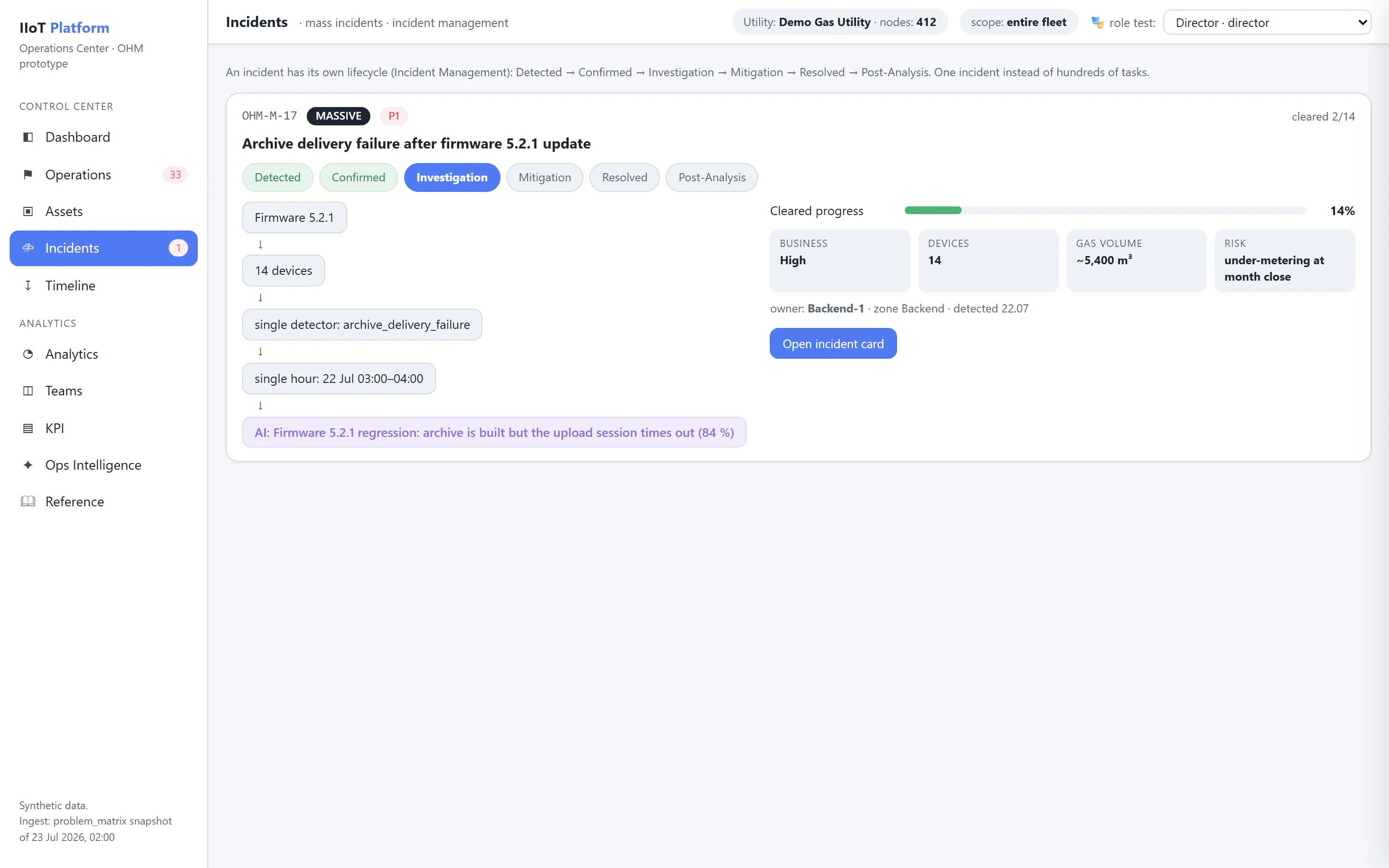
Dashboard operativa
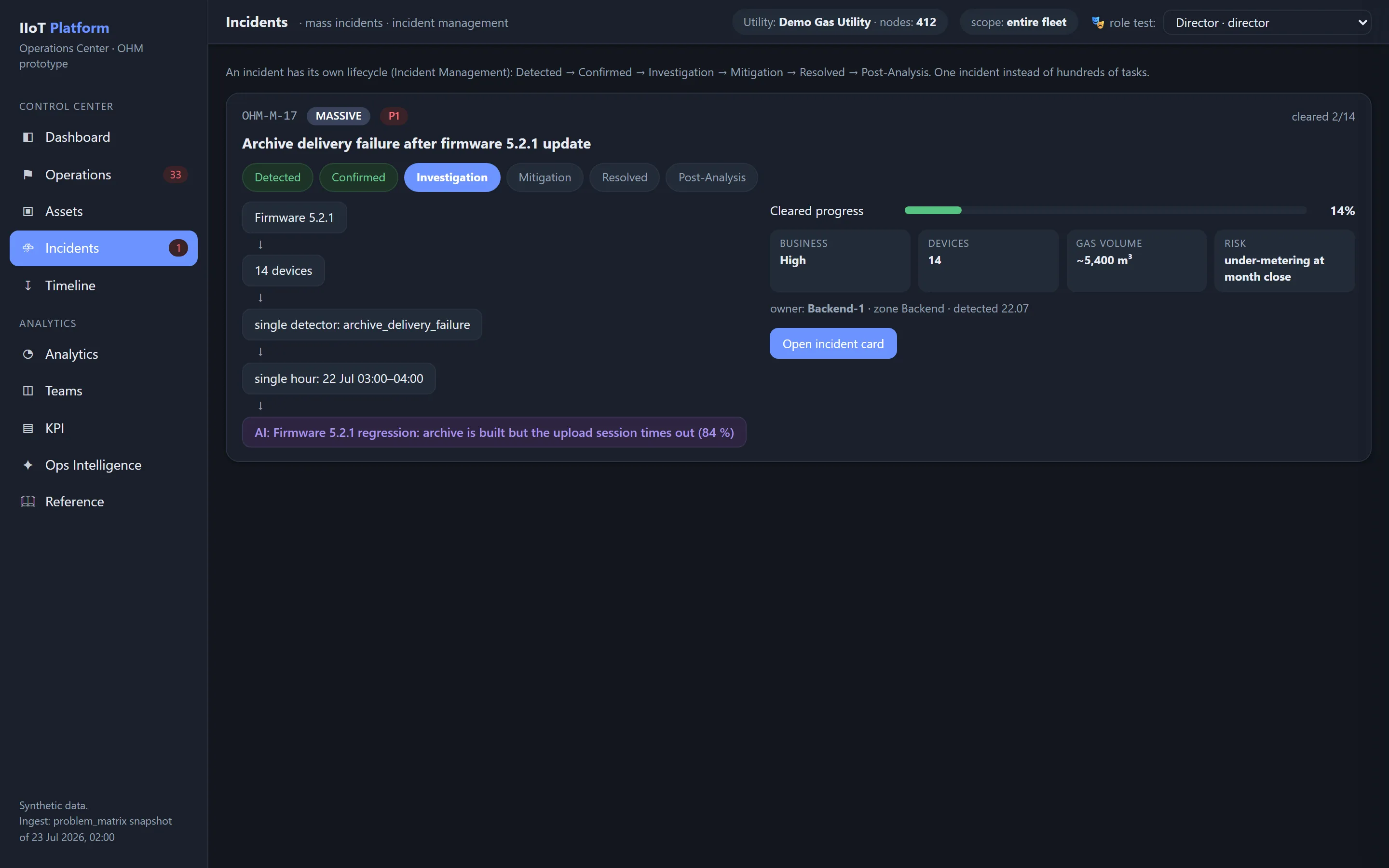
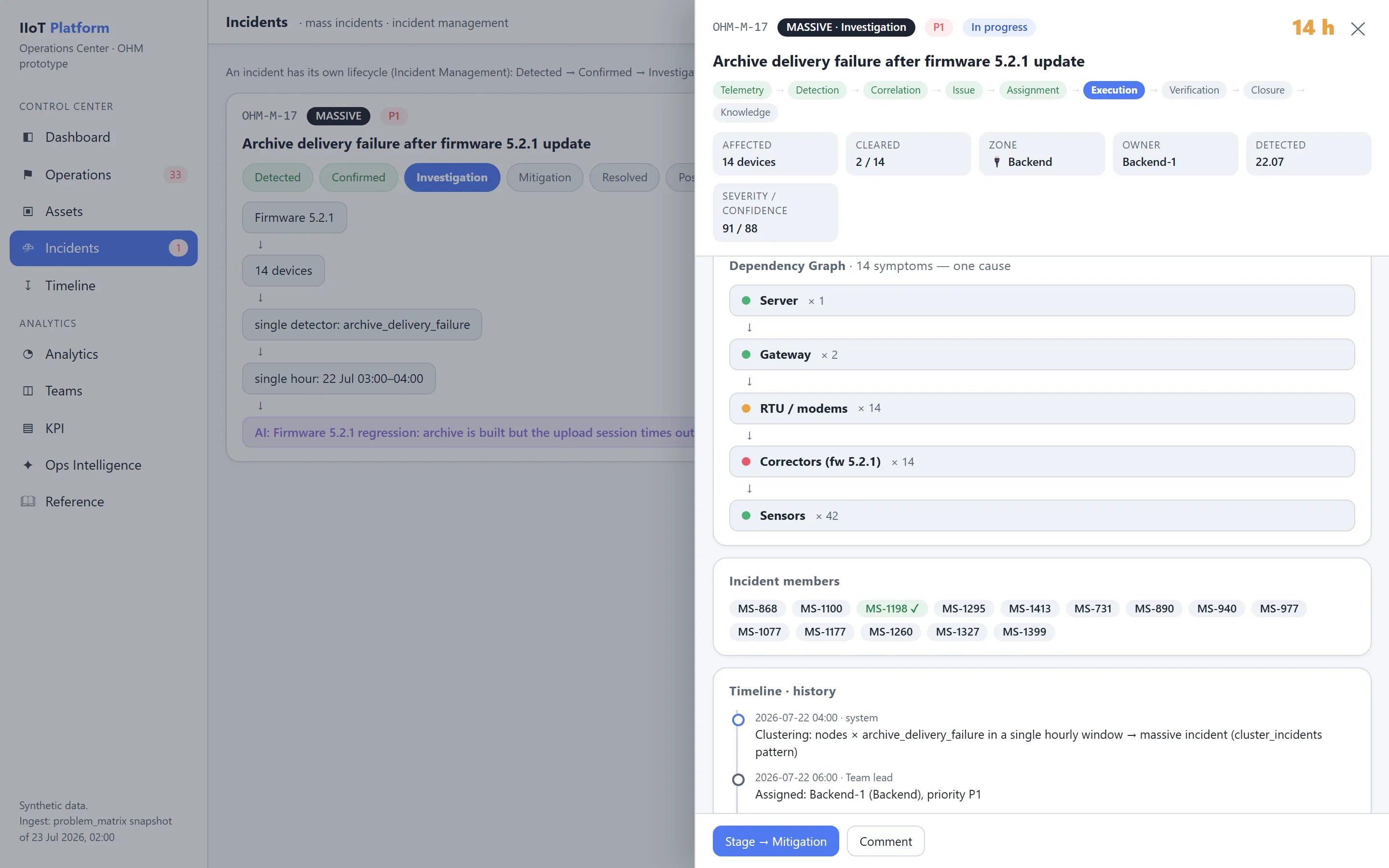
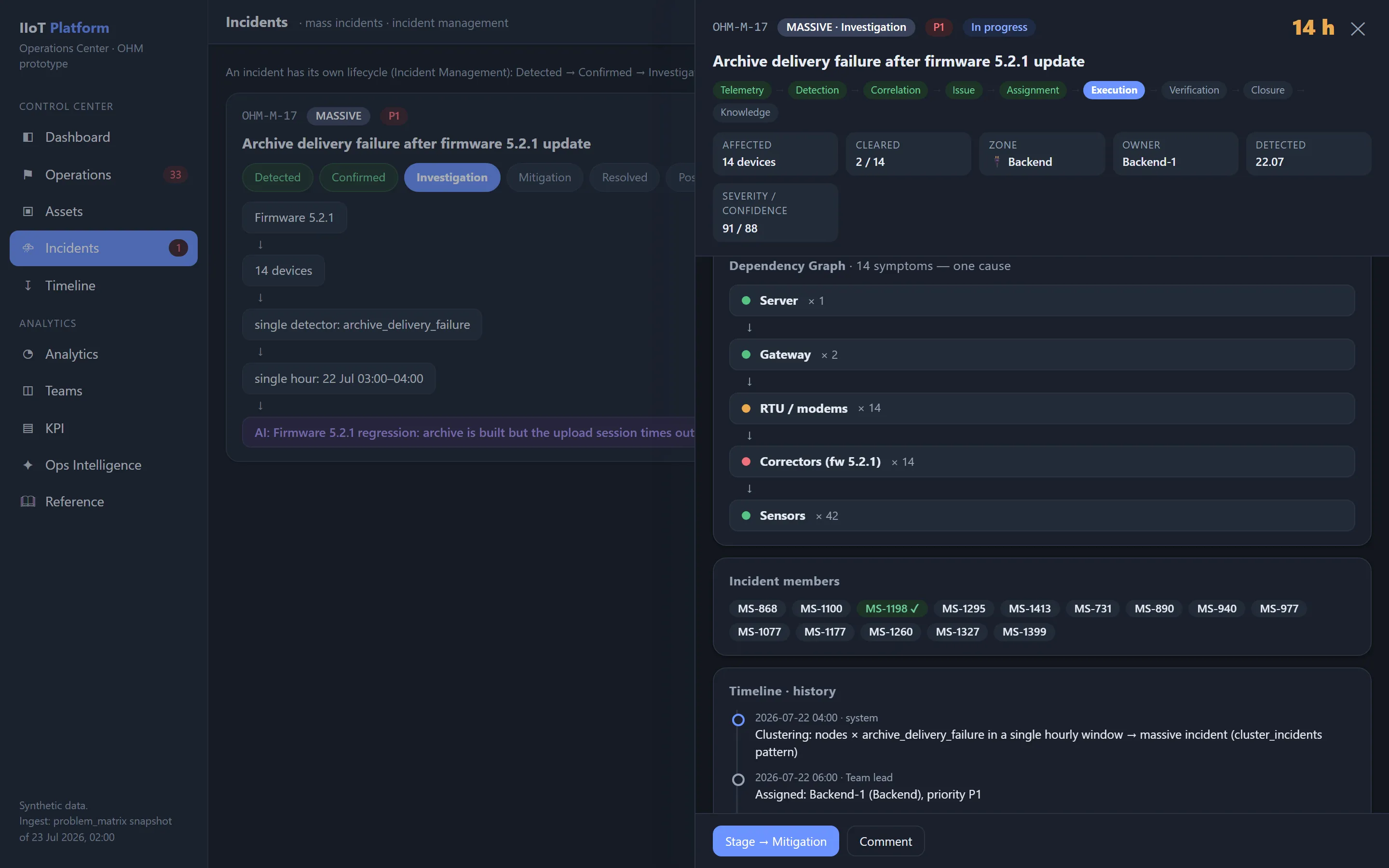
Per ogni Massive Incident il sistema mostra:
- il numero di Operational Issues collegati;
- il numero di Asset;
- le regioni interessate;
- la presunta Root Cause;
- lo stato dell’indagine;
- l’SLA;
- l’impatto sul business;
- l’avanzamento attuale del ripristino.
Riesame post-incidente (Post Incident Review)
Dopo la chiusura, l’incidente viene sottoposto ad analisi.
Il report comprende:
- la cronologia;
- la Root Cause confermata;
- l’efficacia della risposta;
- il rispetto degli SLA;
- le lezioni apprese (Lessons Learned);
- le raccomandazioni per prevenire il ripetersi dell’evento.
Tutte le conclusioni possono essere convertite automaticamente in articoli della Knowledge Base.
Argomenti correlati
Questa pagina è stata utile?
Grazie per il tuo feedback!