Виконання та робоча черга
Як виконується робота — операційне володіння, динамічно ранжована робоча черга, масові операції, призначення з урахуванням завантаження та мобільне польове виконання.
Operational Health Matrix розглядає усунення експлуатаційних проблем як керований процес, а не як набір незалежних завдань.
Після створення Operational Issue система автоматично формує робочий контекст, визначає відповідальну експлуатаційну зону, застосовує належну SLA-політику та розміщує об’єкт у черзі виконання.
Таким чином забезпечується безперервний цикл керування роботами від моменту виявлення проблеми до підтвердженого відновлення нормального стану обладнання.
Модель виконання
Кожен Operational Issue проходить єдиний цикл виконання.
flowchart TD
  A["Виявлення"] --> B["Operational Issue"]
  B --> C["Операційне володіння"]
  C --> D["Планування"]
  D --> E["Виконання"]
  E --> F["Верифікація"]
  F --> G["Закриття"]
  G --> H["Безперервне вдосконалення"]
На кожному етапі система фіксує:
- відповідального;
- строки;
- стан;
- журнал змін;
- Evidence;
- пов’язані завдання;
- застосовані статті Knowledge Base;
- результати перевірки.
Операційне володіння
Відповідальність визначається експлуатаційною зоною, а не користувачем.
Наприклад:
| Canon | Власник за замовчуванням |
|---|---|
no_hourly_archive | Backend-інтеграція |
stale_communication | Команда зв’язку |
battery_low | Польовий сервіс |
pressure_sensor_stuck | Метрологія |
firmware_regression | Команда прошивки |
registry_duplicate | Адміністрування реєстру |
Після визначення зони система призначає конкретного інженера з урахуванням:
- компетенції;
- завантаження;
- регіону;
- графіка роботи;
- поточного backlog;
- рівня допуску.
За потреби керівник може змінити призначення вручну.
Робоча черга
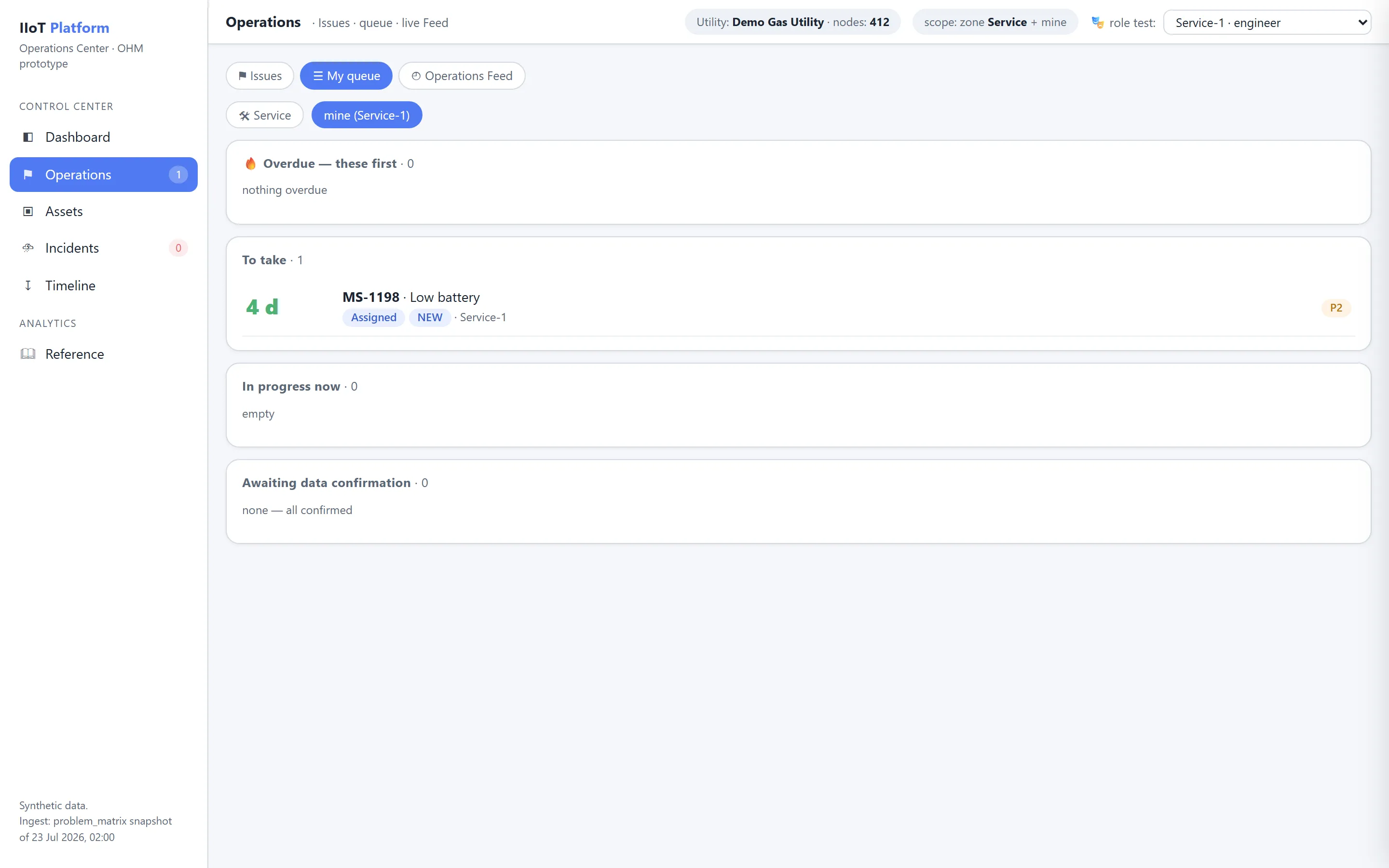
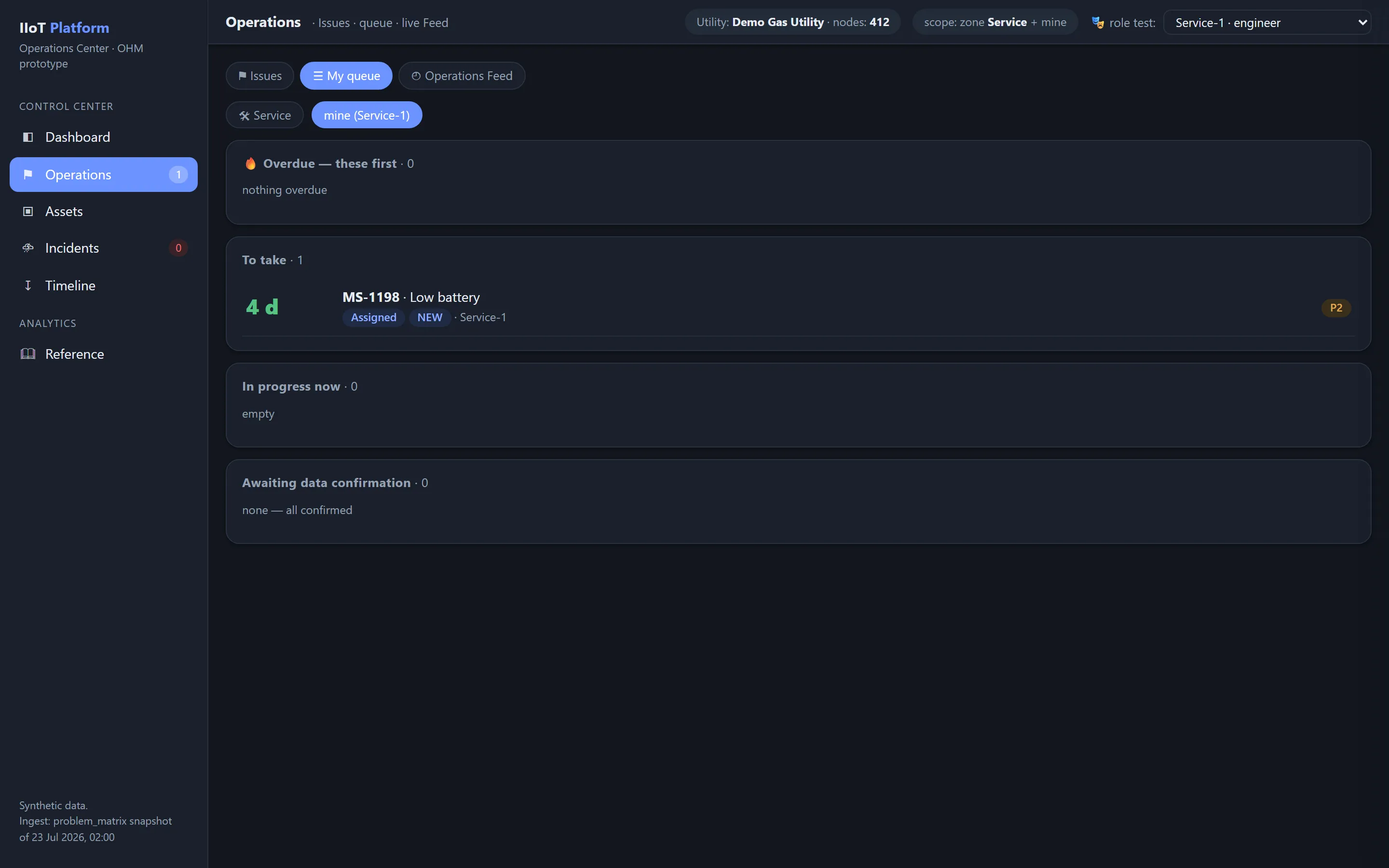
Робоча черга — це динамічне подання активних Operational Issues.
На відміну від традиційного списку завдань, черга будується за сукупністю чинників:
- пріоритет (Priority);
- тяжкість (Severity);
- операційна впевненість (Operational Confidence);
- залишок часу SLA;
- бізнес-вплив (Business Impact);
- кількість уражених активів;
- лічильник перевідкриттів (Reopen Count);
- впевненість у Root Cause.
За замовчуванням найкритичніші об’єкти автоматично піднімаються вгору незалежно від часу створення.
Категорії черг
OHM підтримує кілька спеціалізованих черг.
Вхідні (Incoming)
Нові проблеми, що очікують на triage.
Призначені (Assigned)
Проблеми, призначені інженеру.
У роботі (In Progress)
Роботи, що виконуються зараз.
Очікують верифікації (Awaiting Verification)
Роботи завершено, очікують підтвердження.
Прострочені (Overdue)
Порушено вимоги SLA.
Ескальовані (Escalated)
Автоматично ескальовані проблеми.
Перевідкриті (Reopened)
Проблеми, що виникли повторно після закриття.
Масові інциденти (Massive Incidents)
Системні експлуатаційні інциденти.
Пріоритизація черги
Для ранжування система використовує інтегральний пріоритет.
Наприклад:
де
- P — Priority (пріоритет);
- S — Severity (тяжкість);
- B — Business Impact (бізнес-вплив);
- C — Operational Confidence;
- T — залишок часу SLA.
Отриманий показник використовується виключно для сортування черги і не змінює офіційний Priority об’єкта.
Масові операції
OHM підтримує масові операції над групою Operational Issues.
Наприклад:
- змінити власника;
- змінити зону;
- змінити SLA;
- призначити спільну Root Cause;
- об’єднати в Massive Incident;
- застосувати Knowledge Article;
- змінити пріоритет;
- експортувати.
Усі масові дії фіксуються в Audit Trail.
Врахування capacity
Під час призначення робіт враховується фактична завантаженість підрозділів.
Кожен інженер характеризується:
- Active Issues;
- Verification Queue;
- Planned Work;
- Availability;
- Current Capacity.
Якщо завантаження перевищує встановлену межу, система рекомендує перерозподілити роботи.
Розподіл навантаження
Для запобігання перевантаженню система використовує балансування.
Під час розподілу враховуються:
- кількість відкритих Issues;
- сумарна критичність;
- середній час розв’язання;
- компетенції;
- територіальна належність;
- історія виконання аналогічних робіт.
Мобільне виконання
Польова версія OHM надає інженеру:
- картку активу;
- маршрут;
- історію;
- останні Evidence;
- пов’язані фотографії;
- інструкції;
- Knowledge Articles;
- можливість прикріпити нові матеріали;
- електронний підпис;
- підтвердження виконання.
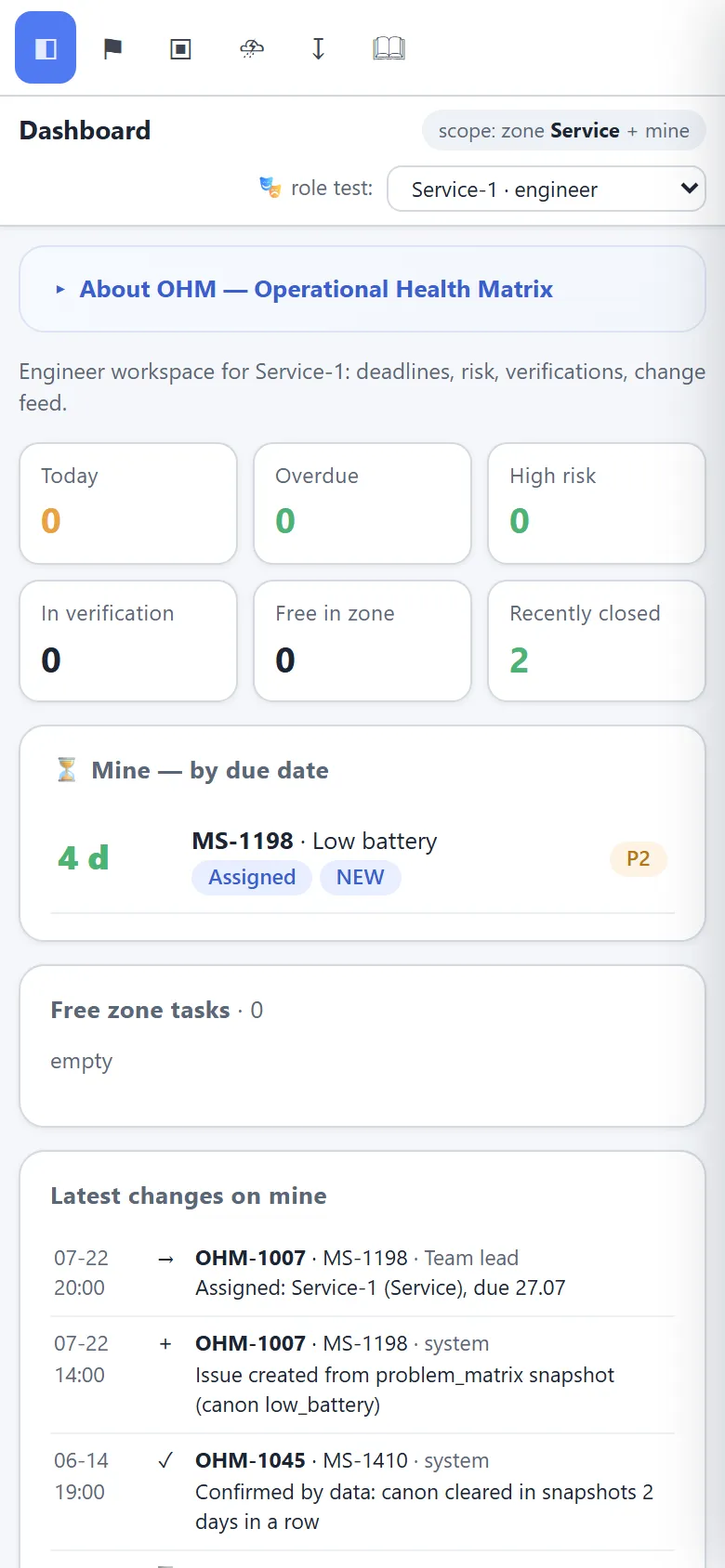
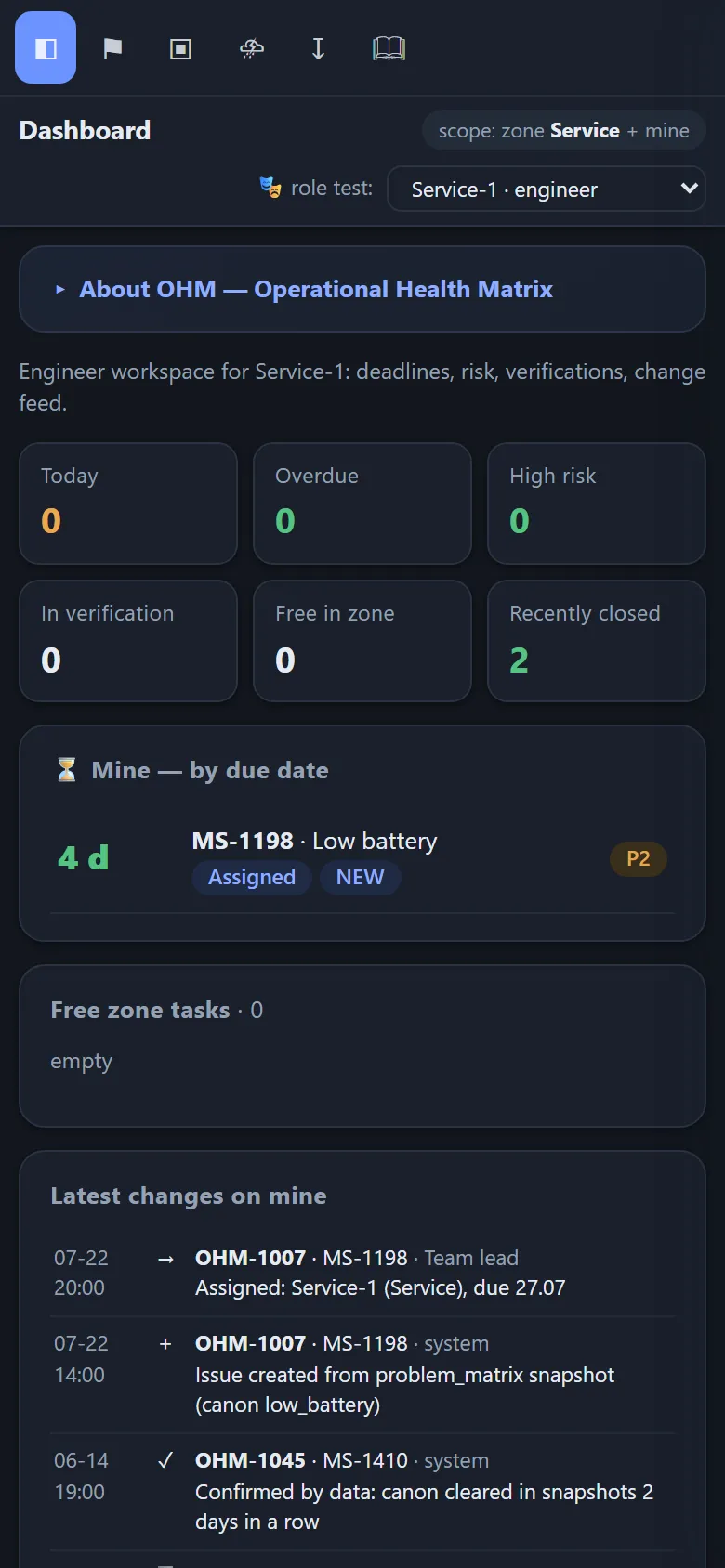
Після синхронізації інформація одразу стає доступною диспетчеру.
Пов'язані теми
Чи була ця сторінка корисною?
Дякуємо за відгук!