Detectors und kanonische Probleme
Wie Detectors Telemetrie in Befunde überführen und Canons Befunde zu gesteuerten Problemen machen — Detector-Klassen, Gates für Datenqualität, Canon-Katalog und Analytik der Detector-Qualität.
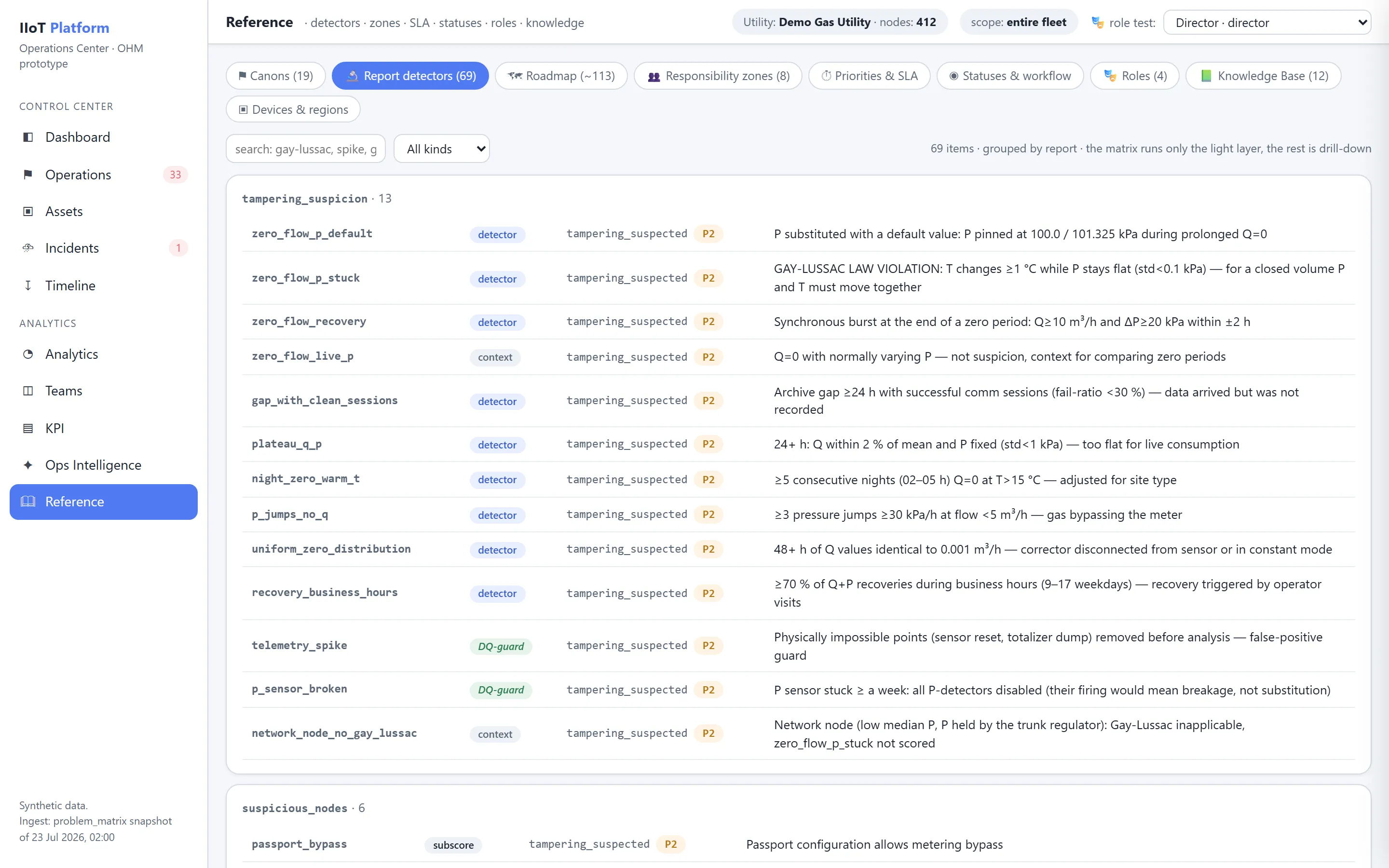
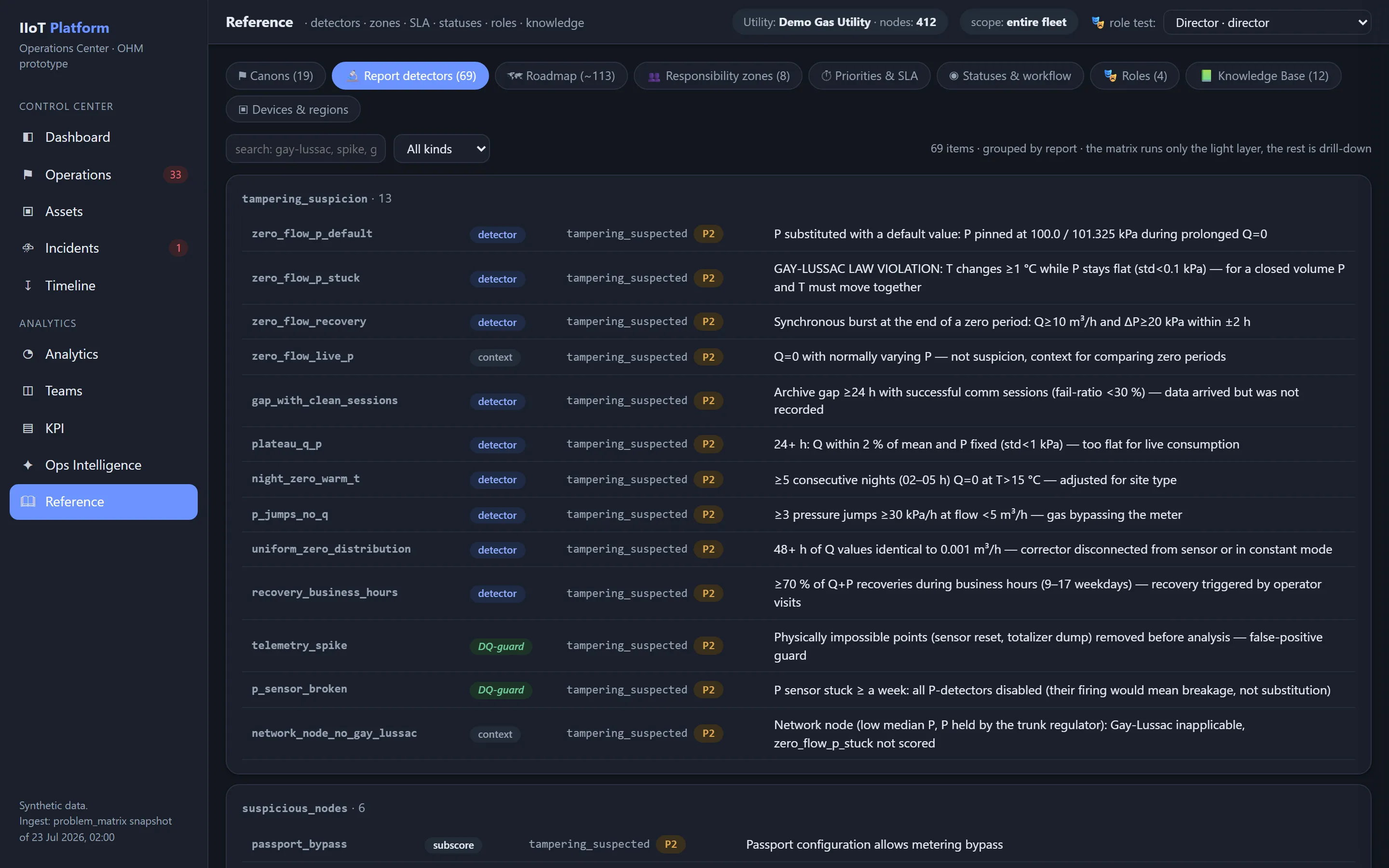
Detector-Architektur
Detector (Detektor)
Detector ist ein Algorithmus, der einen definierten Datenbestand analysiert und daraus einen formalisierten Befund (finding) erzeugt.
Ein Detector steuert keine Ausführung und erzeugt keinen Freitext. Sein Ergebnis hat ein strukturiertes Format.
detector_id: archive.tail_gap.v3
detector_version: '3.2.1'
run_id: 'run-20260723-0400'
asset_id: 'station-5690'
observed_at: '2026-07-23T04:00:00Z'

finding:
  canon: no_hourly_archive
  detected: true
  severity: critical
  confidence: 0.98
  value: 73
  unit: 'hours'
  threshold: 24
  baseline: 0

evidence:
  last_valid_hour: '2026-07-20T03:00:00Z'
  expected_end: '2026-07-23T04:00:00Z'
missing_hours: 73Kette Detector → Canon → Issue
flowchart TD
  D["Detector"] -->|"Klassifizierung"| C["Canon"]
C -->|"Steuerung"| I["Operational Issue"]Detector— ein konkreter Algorithmus;Canon— ein stabiler Typ eines betrieblichen Problems;Operational Issue— eine Ausprägung des Problems in einem konkreten Kontext.
Mehrere verschiedene Detectors können denselben Canon bestätigen.
Beispiel:
flowchart TD
  D1["archive.tail_gap.v3"] --> CANON["no_hourly_archive"]
  D2["archive.coverage.v2"] --> CANON
  D3["archive.delivery_queue.v1"] --> CANON
  D4["session.freshness.v4"] --> CANON
  CANON --> ISSUE["OHM-2026-001842"]
Detector-Klassen
| Klasse | Zweck |
|---|---|
| Connectivity | Kommunikation, Sitzungen, Verfügbarkeit, Signal |
| Archive | Vollständigkeit und Zustellung von Archiven |
| Data Quality | Validität, Lücken, Widersprüche |
| Metering | Durchfluss, Volumen, messtechnische Zusammenhänge |
| Pressure | Bereiche, Sprünge, eingefrorene Messwerte |
| Temperature | Bereiche, Trends, physikalische Konsistenz |
| Power | Batterie, Stromversorgung, Degradation |
| Registry | Registry, Duplikate, Ghost-Objekte |
| Passport | Vollständigkeit und Korrektheit des Passports |
| Integrity | Anzeichen von Manipulation und Integritätsverletzungen |
| Security | anomale Zugriffs- und Konfigurationsereignisse |
| Firmware | Fehler, Inkompatibilität, Regressionen |
| Topology | Abhängigkeiten zwischen Geräten, Gateways, Diensten |
| Operations | Überfälligkeiten, fehlender Verantwortlicher, Wiederholungen |
| Predictive | Prognose von Ausfall oder Degradation |
Anforderungen an jeden Detector
Jeder produktive Detector hat:
- eine eindeutige
detector_id; - eine semantische Version;
- einen definierten Zweck;
- einen Verantwortlichen;
- eine Beschreibung der Eingangsdaten;
- kontrollierte Schwellenwerte;
- Ausschlussregeln;
- Anforderungen an die Mindeststichprobe;
- DQ-Gates;
- eine Formel für Severity;
- eine Formel für Confidence;
- einen zugehörigen Canon;
- einen Satz von Evidence;
- Tests;
- eine Kontrollstichprobe;
- eine Abschätzung der False Positives;
- ein Datum der Inbetriebnahme;
- ein Änderungsprotokoll;
- einen Abschaltmodus und Rollback.
Gates für Datenqualität (DQ-Gates)
Ein Detector darf keine hohe Confidence ausweisen, wenn die Ausgangsdaten unvollständig oder widersprüchlich sind.
Beispiele für Gates:
| Bedingung | Wirkung auf den Detector |
|---|---|
Keine gültige asset_id | automatische Aktion blockieren |
| Zu wenig Historie | Confidence senken |
| Fehlerhafter Timestamp | Freshness nicht berechnen |
| Keine Maßeinheit | nicht mit einem physikalischen Schwellenwert vergleichen |
| Zu kleine Stichprobe | keine Prognose erstellen |
| Ghost-Objekt in der Registry | zugehörige Issues auf non-actionable setzen |
Zustand der Detectors (Detector Health)
OHM überwacht die Qualität der Detectors selbst.
Wesentliche Kennzahlen:
- Anzahl der Auslösungen;
- Anteil bestätigter Auslösungen;
- False Positive Rate;
- Anteil manueller Abbrüche;
- Anteil der Wiedereröffnungen;
- Verteilung der Confidence;
- Drift der Eingangsdaten;
- Veränderung der Stichprobenstruktur;
- mittlere Zeit bis zur Bestätigung;
- Version des Algorithmus;
- Anzahl aktiver Issues je Version.
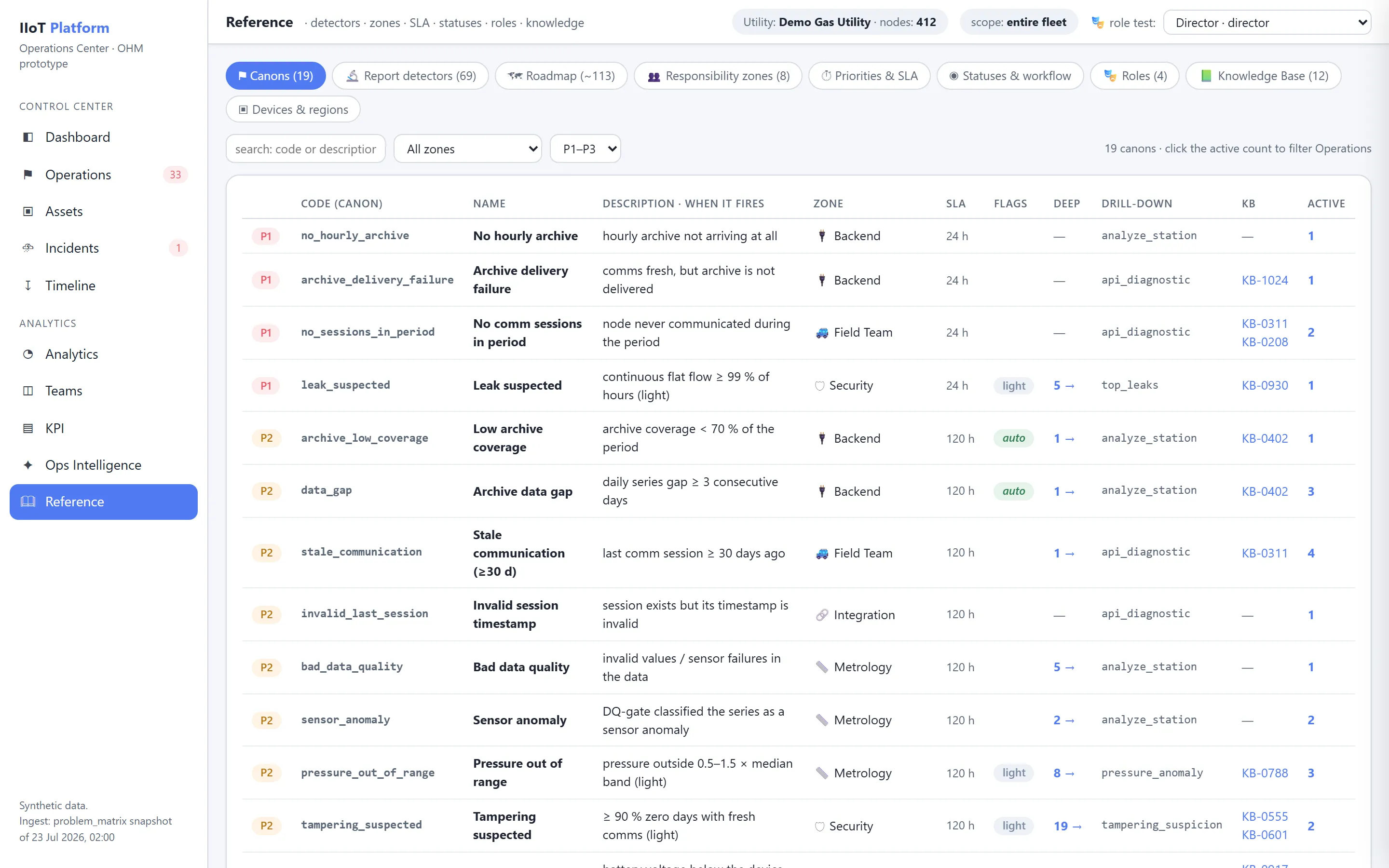
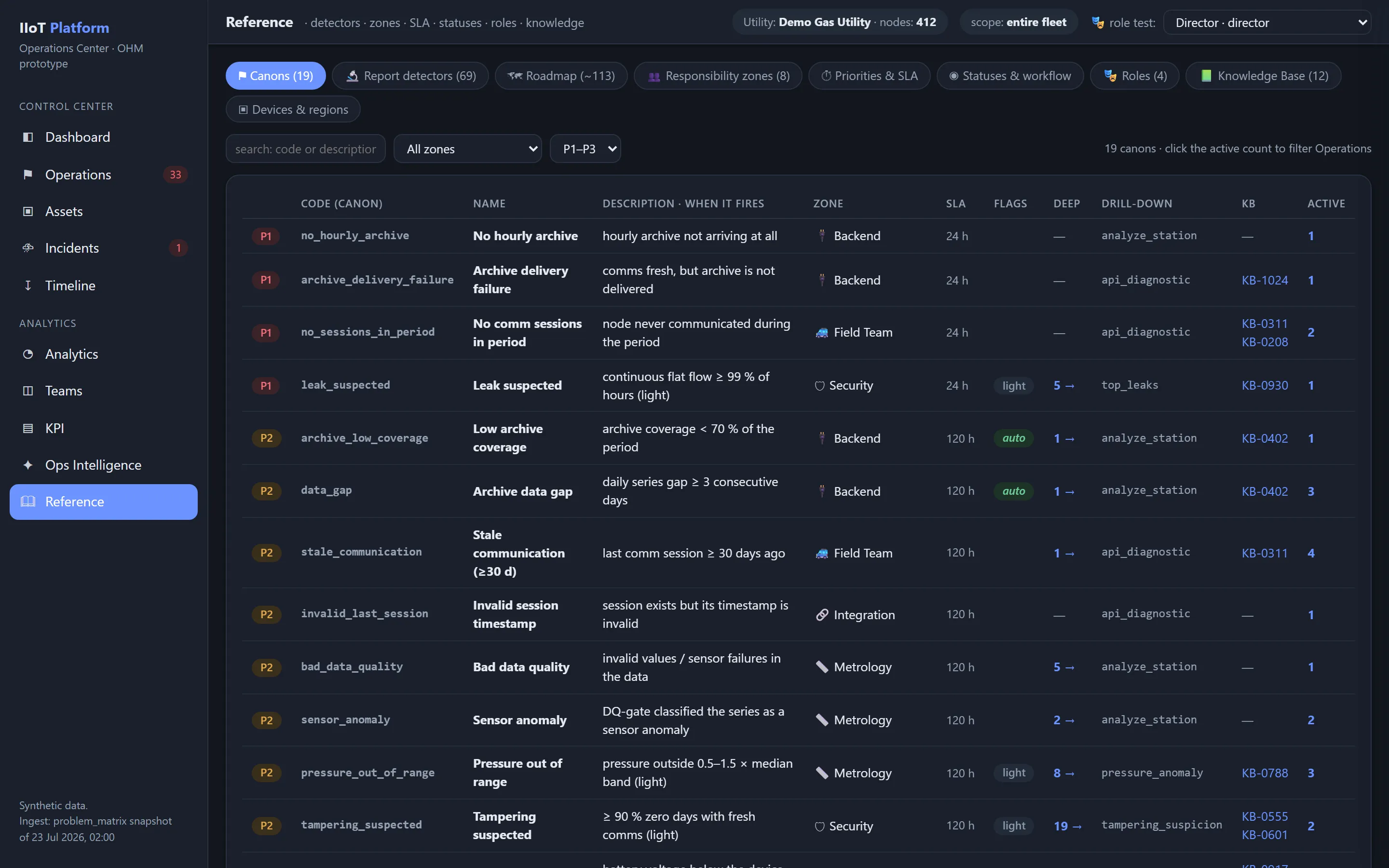
Kanonische Probleme
Canon ist eine stabile fachliche Klassifizierung eines Problems, die nicht von der konkreten Implementierung eines Detectors abhängt.
Warum Canons notwendig sind
Ohne Canons zerfällt ein analytisches System schnell in eine Sammlung uneinheitlicher Meldungen:
archive_missingno_archivearchive_gaphourly_data_absentdelivery_error
Ein Canon fasst all diese gleichwertigen Signale unter einer einzigen Kennung zusammen: canon: no_hourly_archive.
Das ergibt:
- einen einheitlichen Workflow;
- ein einheitliches SLA;
- eine verständliche Analytik;
- stabile KPIs;
- eine gemeinsame Knowledge Base;
- Vergleichbarkeit zwischen Versionen;
- Übersetzung der Oberfläche ohne Änderung der Logik;
- Integration mit externen Systemen.
Aufbau eines Canons
canon_id: no_hourly_archive
name: 'Hourly archive is missing'
domain: archive
default_owner_zone: backend_integration
default_priority: P1
actionable: true
verification_mode: data
sla_policy: archive_p1
suppression_group: communication_archive
knowledge_tags:
  - archive
  - delivery
  - communication
Basissatz an Canons
| Canon | Bedeutung | Primäre Zone |
|---|---|---|
no_sessions_in_period | im analysierten Zeitraum liegen keine Sitzungen vor | Integration / Kommunikation |
stale_communication | das Gerät hat sich lange nicht gemeldet | Feld / Kommunikation |
no_hourly_archive | das Stundenarchiv fehlt | Backend / Integration |
archive_delivery_failure | das Archiv wurde erzeugt, aber nicht zugestellt | Backend / Integration |
archive_incomplete | das Archiv ist unvollständig | Messdienst |
abnormal_session_length | anomale Dauer der Sitzungen | Kommunikation / Integration |
battery_low | kritisch geringe Batteriereserve | Service |
battery_unknown | der Batteriezustand ist unbekannt | Service / Integration |
passport_incomplete | die Passdaten sind unvollständig | Metrologie |
registry_ghost | das Objekt existiert logisch, ist aber physisch nicht bestätigt | Registry |
registry_duplicate | Konflikt oder Dublette von Kennungen | Registry |
pressure_out_of_range | Druck außerhalb des zulässigen Bereichs | Betrieb |
pressure_sensor_stuck | der Drucksensor ändert sich trotz erwarteter Dynamik nicht | Metrologie / Service |
temperature_out_of_range | Temperatur außerhalb des zulässigen Bereichs | Betrieb |
data_quality_degraded | die Datenqualität lässt keine belastbare Analyse zu | Integration |
firmware_regression | die Probleme hängen mit einer Firmware-Version zusammen | Firmware / Backend |
tampering_suspected | Anzeichen einer möglichen Manipulation erkannt | Sicherheit / Metrologie |
leak_suspected | indirekte Anzeichen einer möglichen Leckage erkannt | Betrieb |
topology_dependency_failure | die Symptome werden durch den Ausfall einer gemeinsam genutzten abhängigen Komponente verursacht | Backend / Infrastruktur |
Versionierung von Canons
Eine Änderung des Textes oder der Übersetzung erfordert keine Änderung der Kennung.
Eine neue Canon-Version ist erforderlich, wenn sich eines der folgenden Merkmale ändert:
- die fachliche Bedeutung;
- die Zuweisungsregel;
- das Kriterium der Actionability;
- die Art der Verifikation;
- das SLA-Prinzip;
- die Logik der Zusammenführung mit anderen Problemen.
Analytik der Detector-Qualität
Die Operational Health Matrix bewertet nicht nur die Anlagentechnik, sondern auch die Qualität der eigenen analytischen Algorithmen.
Für jeden Detector berechnet das System:
- Accuracy;
- Precision;
- Recall;
- False Positive Rate;
- False Negative Rate;
- mittlere Confidence;
- Drift;
- Stability;
- mittlere Verifikationsdauer;
- Annahmequote.
Dieser Ansatz erlaubt es, das analytische Modell der Data Platform kontinuierlich zu verbessern, ohne die Reproduzierbarkeit der Ergebnisse zu beeinträchtigen.
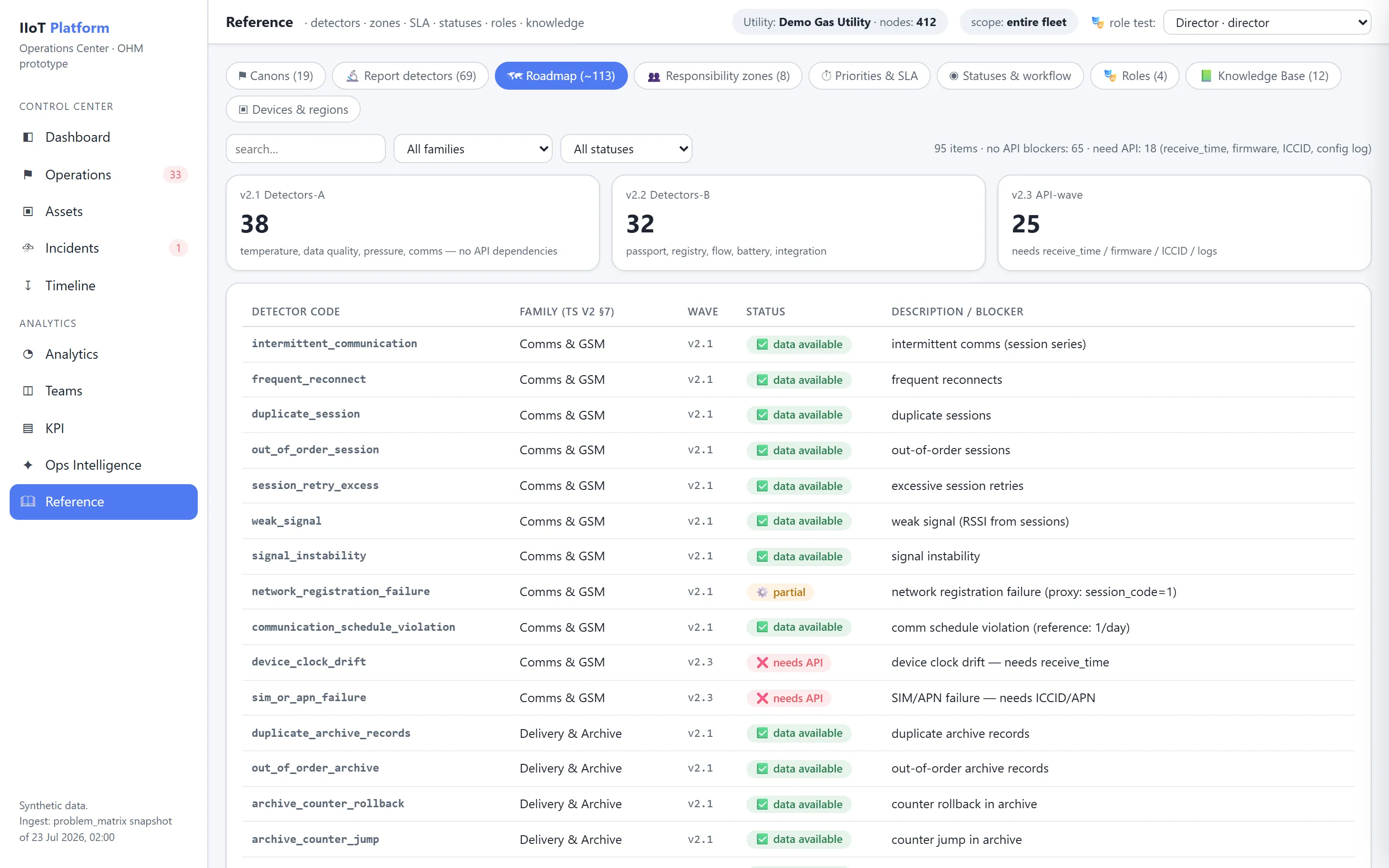
Das Detector-Portfolio selbst entwickelt sich entlang einer stufenweisen Roadmap: Neue Detectors werden in Wellen eingeführt, und jede Welle wird erst durch die Bereitschaft der zugrunde liegenden Plattform-APIs freigegeben.
Verwandte Themen
War diese Seite hilfreich?
Danke für dein Feedback!