Implementing AI in pressure and temperature sensors
How a digital pressure and temperature sensor uses an embedded AI channel for anomaly detection, control chains, and key benefits.
General description
The digital pressure and temperature sensor combines a primary pressure transmitter and a primary temperature transmitter in a single housing.
The intelligent analytics channel relies on an artificial intelligence hardware-software module integrated into the sensor. It provides analytical control over how the physical quantities of pressure and temperature change over time.
Using this channel, the sensor can be trained on specific processes that the measured values follow over time. When the measured values deviate sharply from the previously trained behavior model, the sensor raises a hardware event (interrupt) through the analytics channel and generates a json sequence describing how the measured values deviate over time — the so-called “heat trace” or “gap”. This lets the upper-level system act instantly (“on the fly”) according to the configured algorithm.
Control chains
This sensor makes it possible to abandon the classical control chain and instead use direct or indirect process control with parallel event transmission to the server.
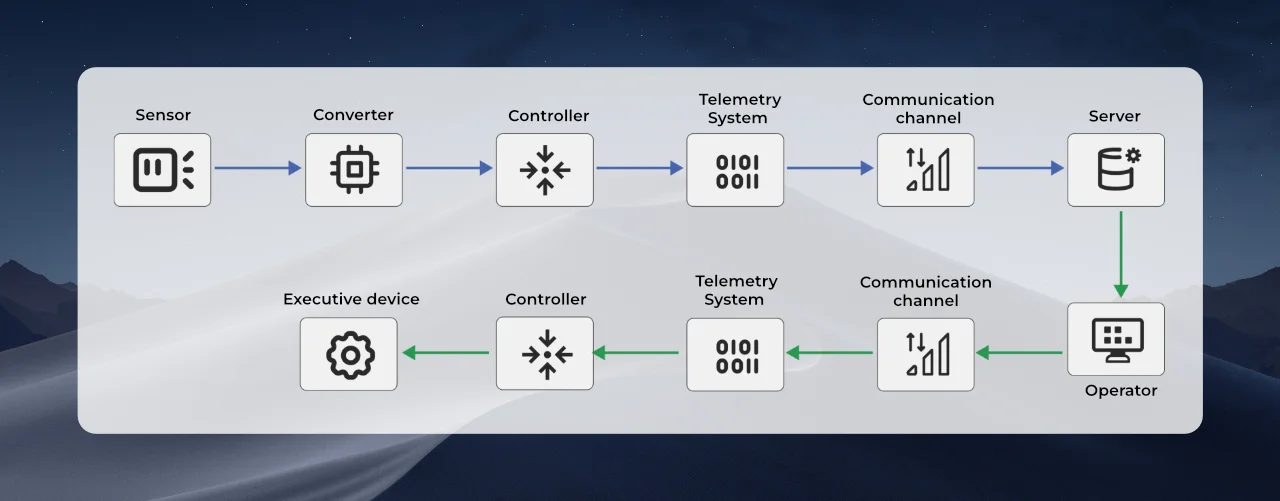
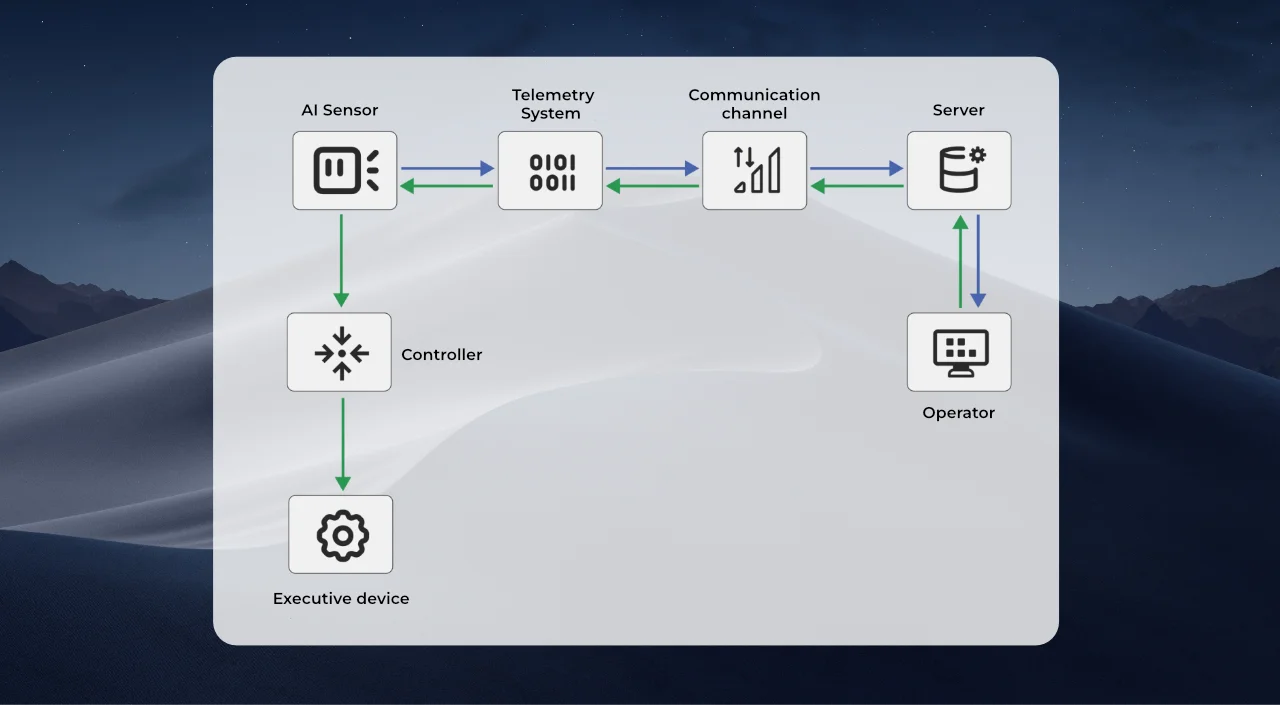
Direct control of certain actuating devices is also possible:

Both channels of the intelligent pressure and temperature sensor operate independently and in parallel. This allows the sensor to be used both in classical monitoring and control systems and in self-learning intelligent systems.
When working as part of telemetry systems, the sensor’s digital channel allows the sensor to be trained remotely to recognize anomalies in the technological process. It also supports rapid cloning of a sensor’s AI algorithm, enabling fast scaling across technologically identical processes.
The key difference between control systems built on an intelligent sensor and PID control systems lies in the flexibility of training the sensor to a specific technological process that runs over time. This gives a direct, “on-hit” action on the event, whereas PID systems adjust the measured parameters iteratively through an actuator using feedback.
Key benefits
The main advantages of smart sensors are:
- Instant response speed to process changes over time, down to 1 ms — up to 1000 times faster than existing systems.
- Reduced total cost of a process monitoring and control system (by up to 100 times) by eliminating the entire chain of intermediate devices.
- No need to develop complex mechanisms for monitoring and control.
- Lower probability of failure and reliability of monitoring and control systems improved several times over, thanks to the shorter device chain.
Related topics
Was this page helpful?
Thanks for your feedback!